
Season dates and peak months
The US National Hurricane Center (NHC) defines the eastern Pacific hurricane season as May 15 to November 30. Its 1991 to 2020 averages show about 15 named storms, 8 hurricanes and 4 major hurricanes a year in the basin. Activity usually picks up from late June, peaks in late August, and stays high into early October; it is spread more evenly across the season than in the Atlantic.
Most eastern Pacific storms stay out at sea or track toward the Mexican mainland, and only a small share reach the tip of Baja. For Los Cabos in particular, September is the month most associated with landfalls: Odile in 2014 and Olaf in 2021 both came ashore in mid-September, and Norma arrived in late October 2023. Our weather by month guide shows how the rain and humidity build over the same period.
Storms that have hit Los Cabos
Hurricane Odile is the storm locals measure others by. It made landfall near Cabo San Lucas on September 15, 2014 as a Category 3 with winds of about 125 mph, knocked out power to most of Baja California Sur, closed the airports and left roughly 30,000 visitors stranded when all flights were cancelled. Just a week earlier, Hurricane Norbert had passed offshore and caused flooding and evacuations across the southern peninsula.
Hurricane Olaf made landfall near San José del Cabo on September 10, 2021 as a Category 2 with winds around 105 mph; about 20,000 tourists sheltered in their hotels, 37 flights were cancelled and power was largely restored within two days. Hurricane Norma came ashore in Baja California Sur on October 21, 2023 as a Category 1; Los Cabos airport closed ahead of it, trees and boats were damaged, and around 10,000 people lost power.
Many seasons bring only near misses. In 2025, Hurricane Lorena in early September and Priscilla in early October brought rain, high surf, beach closures and port closures to small boats, but no major wind damage in Los Cabos.
How warnings work
Two agencies track storms that could affect Los Cabos. The NHC issues forecasts and advisories for the whole eastern Pacific, and Mexico's national weather service, the Servicio Meteorológico Nacional (SMN, part of CONAGUA), issues the official Mexican watches and warnings. Locally, the municipal civil protection office (Protección Civil) opens shelters and announces closures, and the port captain closes the harbor to small boats when seas build, which cancels fishing, snorkeling and sunset trips.
Storm forecasts are usually available several days ahead, so there is normally time to change plans. The NHC's five-day outlooks and cone graphics are the quickest way to see whether a system is heading for the tip of Baja; remember that the cone shows the likely path of the center, not the size of the storm, and heavy rain and surf can reach Los Cabos well outside it. When a storm is approaching, airlines often issue travel waivers for Los Cabos, and hotels and resorts put their own storm procedures into action.
What a storm day is like
For most visitors, a tropical system passing offshore means a day or two of heavy rain, gusty wind and big surf, with beaches closed to swimming and boats kept in port. Roads through the arroyos (dry riverbeds) can flood quickly, so avoid driving in heavy rain. After the storm clears, the sea often takes a day or two to settle.
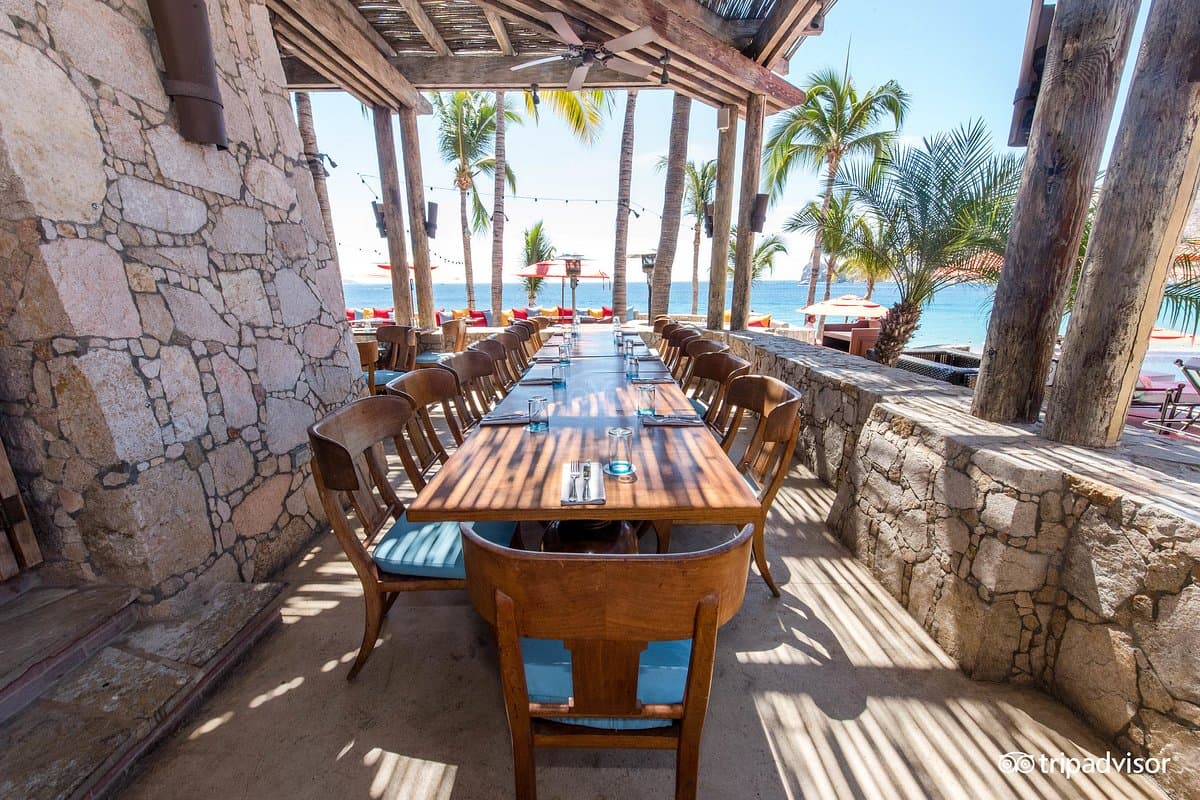
The resort-side experience depends on the property. Larger resorts and residences such as Hacienda Beach Club have staff who secure furniture and follow storm protocols, but we do not publish specific storm policies here. If you are traveling between August and October, ask us how the villa and resort handle a storm warning, and read the cancellation terms in our terms and conditions before you book.
Travel insurance and cancellations
If you travel in hurricane season, buy travel insurance when you book, not when a storm appears on the forecast. Many policies treat a storm as a known, foreseeable event once it has been named, and will not cover cancellations caused by it if the policy was bought afterwards.
- Read how the policy defines a covered weather event: some pay only if your destination is declared uninhabitable or your flight is cancelled for a set number of hours.
- Cancel for Any Reason (CFAR) upgrades cost more and reimburse only part of the trip cost, but they cover changing your mind.
- Check your airline's change and waiver rules; they often loosen for named storms.
- Keep booking confirmations and receipts in one place so claims are easy to file.
- Confirm the villa or hotel cancellation terms separately; they are a contract between you and the property, not the insurer.
Should you book in hurricane season?
Plenty of people do, and there are real advantages: warmer water than winter, fewer crowds and more availability. May, June and November carry relatively low storm risk for Los Cabos; July to October is when both the heat and the odds go up, with September the month to be most careful about. If your dates are fixed, such as a wedding or a big birthday, the calmer weather of mid-November through April is the safer choice. Our best time to visit guide compares the months.
If you do come in late summer or early fall, stay flexible for the first and last days of the trip, keep an eye on the NHC and SMN forecasts in the week before you fly, and plan boat trips early in the stay so there is room to reschedule. Our airport transfer guide covers getting to and from SJD. If you have questions about a fall stay, contact us, or check dates and book Villa 1 direct.