Official season dates
Whale watching in Mexico is regulated by the environment ministry, SEMARNAT, under the national standard NOM-131-SEMARNAT-2010. Each fall it publishes a notice in the federal gazette (Diario Oficial) setting that winter's dates and zones. For the 2025 to 2026 season, the notice set December 15, 2025 to April 30, 2026 for the Cabo San Lucas Flora and Fauna Protection Area and for Cabo Pulmo National Park.
Many operators and older guides still quote December 15 to April 15, and some tours wind down in early April as sightings thin out. The notice for the 2026 to 2027 season had not been published when we checked; the dates have been similar from year to year, but confirm with your operator before booking a late-April trip.
Best months to go
January to March is the most reliable stretch, and February is the month most local operators name for the highest chance of close encounters. Calves become more active from around February and are a big part of the show through March. December and April can still be good, just less predictable.
Whale season also lines up with Cabo's best weather: dry, sunny days in the high 70s to low 80s °F and cool evenings. See our best time to visit guide for how it overlaps with holiday crowds and spring break.
Humpbacks, gray whales and the rest
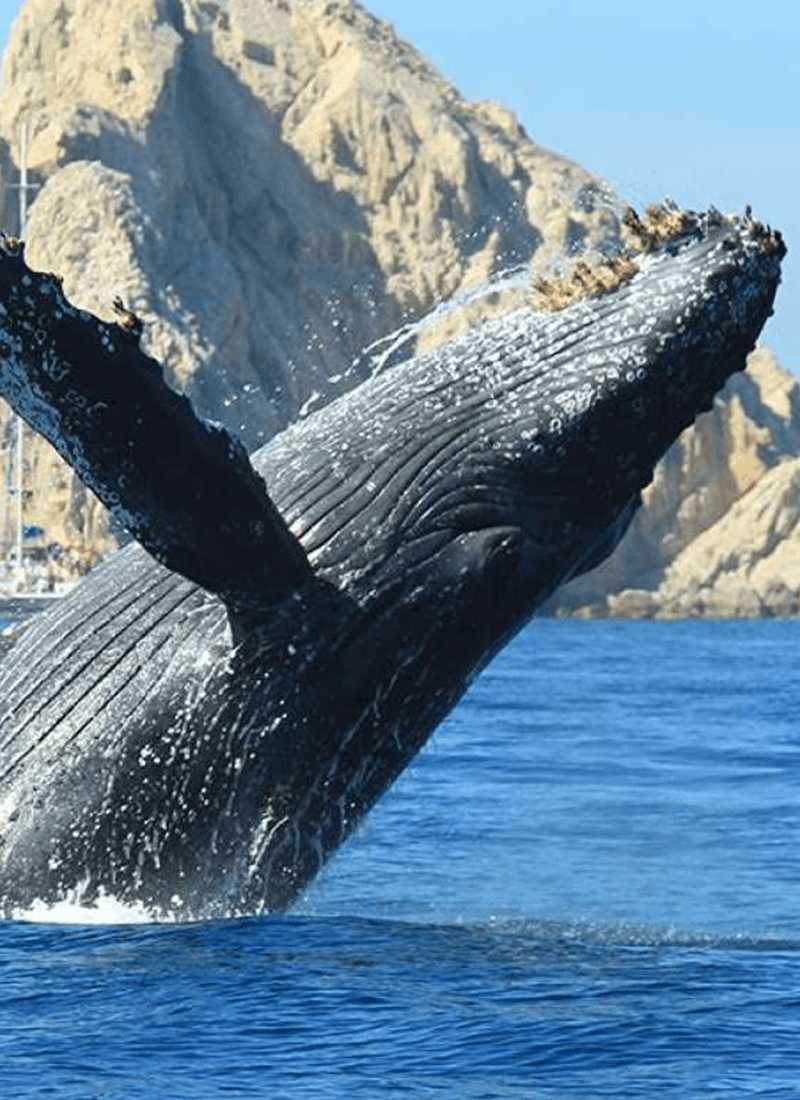
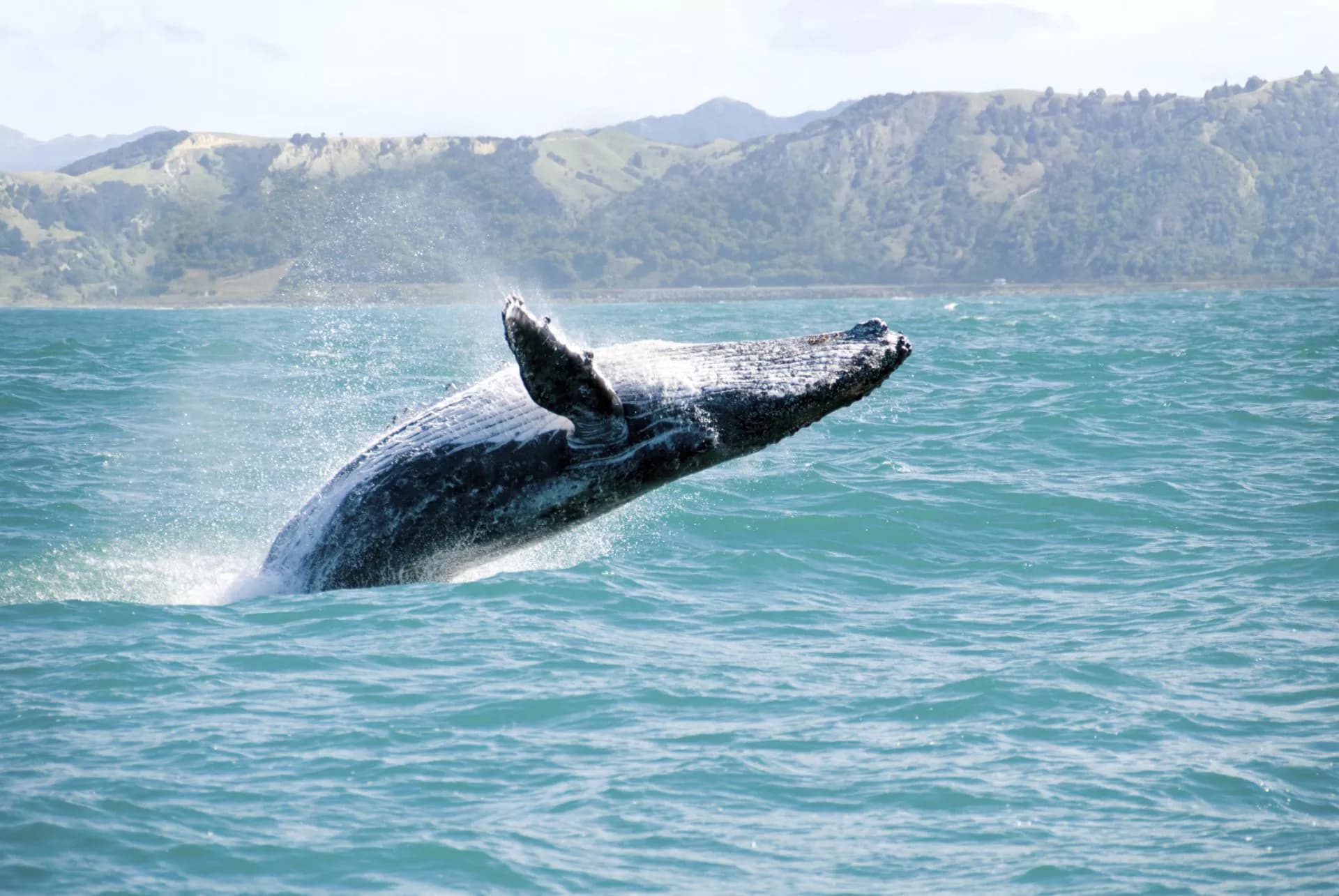
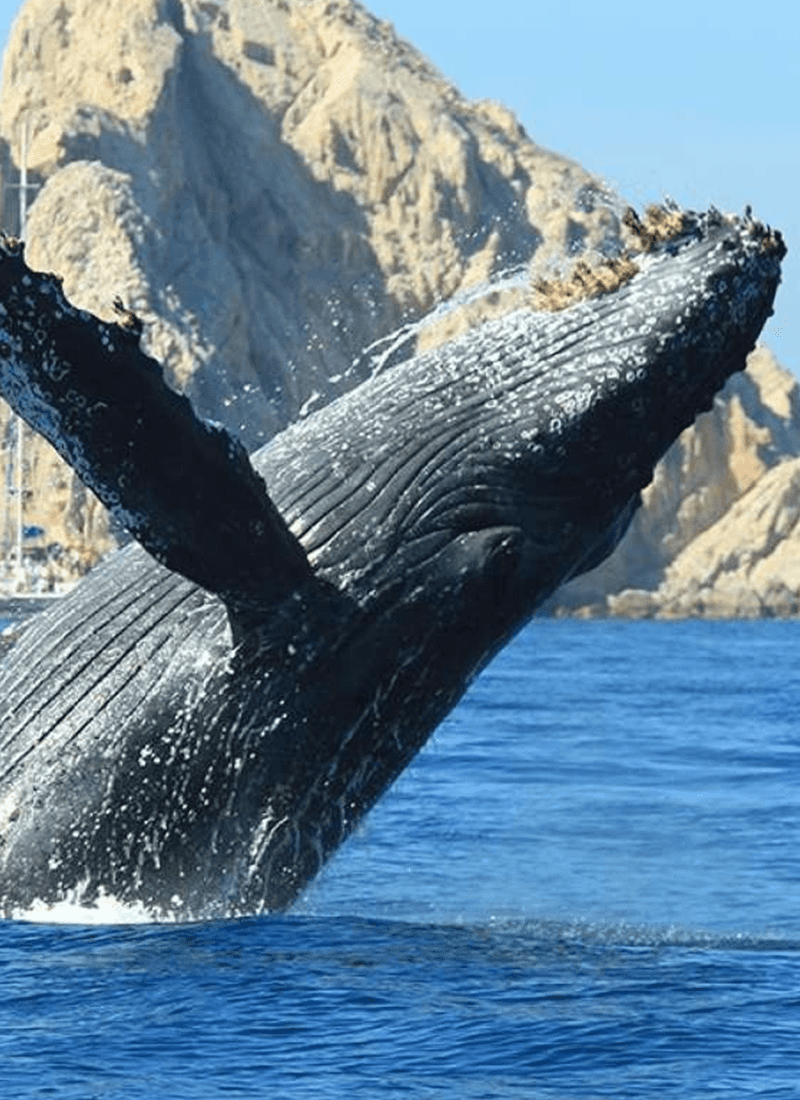
Humpback whales are what most people see off Cabo San Lucas. They are known for breaching, tail slaps and, in the males, long songs that you can hear through a hydrophone. Gray whales migrate along the Pacific coast between Alaska and their breeding lagoons in Baja California Sur, including Ojo de Liebre, San Ignacio and Magdalena Bay; you may see them passing Cabo, but the famous close encounters happen in those lagoons, which are a long drive north.
Blue whales, fin whales and orcas are occasional visitors. Whale sharks are fish, not whales, and are seen in the Bay of La Paz rather than off Cabo; see our La Paz whale shark day trip page if that interests you.
Watching from shore
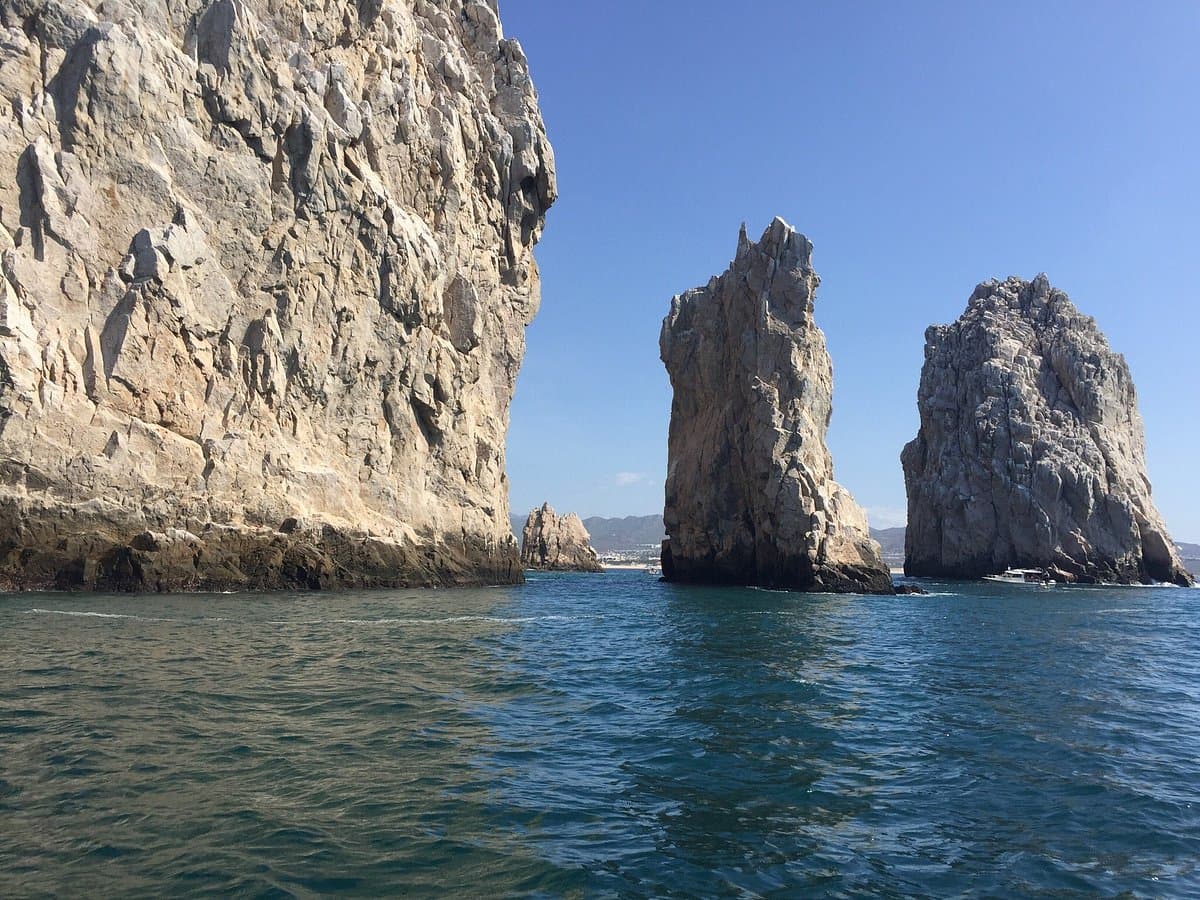
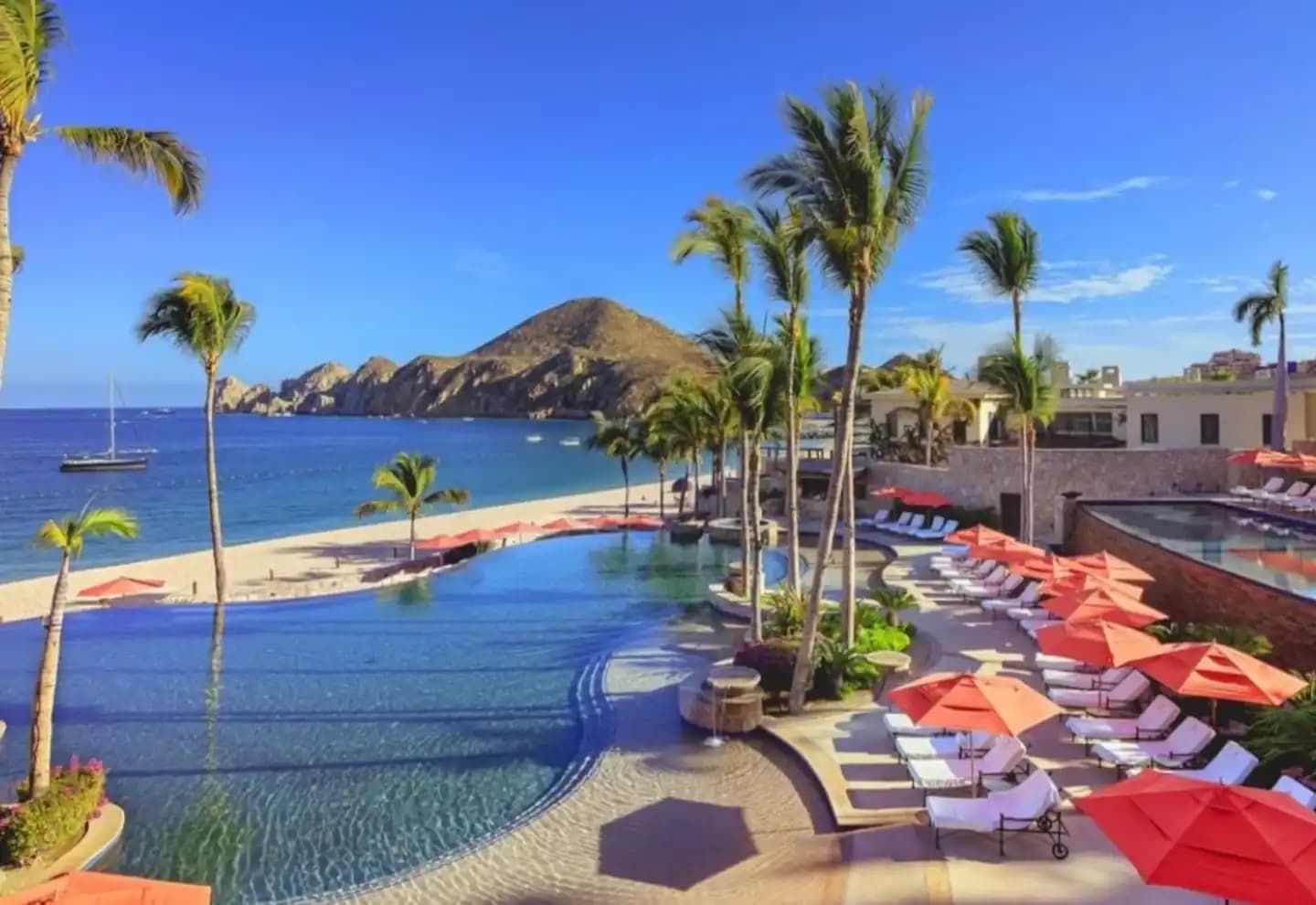
You do not need a boat to see whales in Cabo. In the peak months spouts and breaches are regularly visible from Médano Beach and its beachfront restaurants, looking out across the bay toward Land's End. Early mornings, when the water is flat, make spouts easiest to spot.
On the Pacific side, the high ground around Pedregal and the lighthouse area gives wide views of the ocean, and beaches such as Cerritos, north toward Todos Santos, are known for sightings from the sand in January and February. The coastline east of San José del Cabo toward the East Cape is another good bet on a drive to Cabo Pulmo.
Types of whale-watching tours
Most trips leave from the Cabo San Lucas marina, a short walk from Médano, and last around two to three hours. The choice is mainly about how close to the water you want to be and how much comfort you need.
- Small open boats (pangas and inflatables/Zodiacs): quick, low to the water and good for photos; bumpy on choppy days and short on shade.
- Catamarans and larger tour boats: more stable, with shade, toilets and often drinks; better with children or anyone prone to seasickness.
- Sailing trips: quieter under sail, often combined with a sunset; our sunset cruise page covers the options.
- Hydrophone tours: some operators lower an underwater microphone so you can hear humpback songs.
- Private charters: your own boat and schedule, useful for a family or group; our private yacht charter page has details.
The rules boats must follow
NOM-131 sets out how permitted boats may approach whales, and knowing the basics helps you pick a responsible operator. Authorized operators should carry a visible SEMARNAT permit or identification; unlicensed "pirate" boats are common on the beach, so ask before you board.
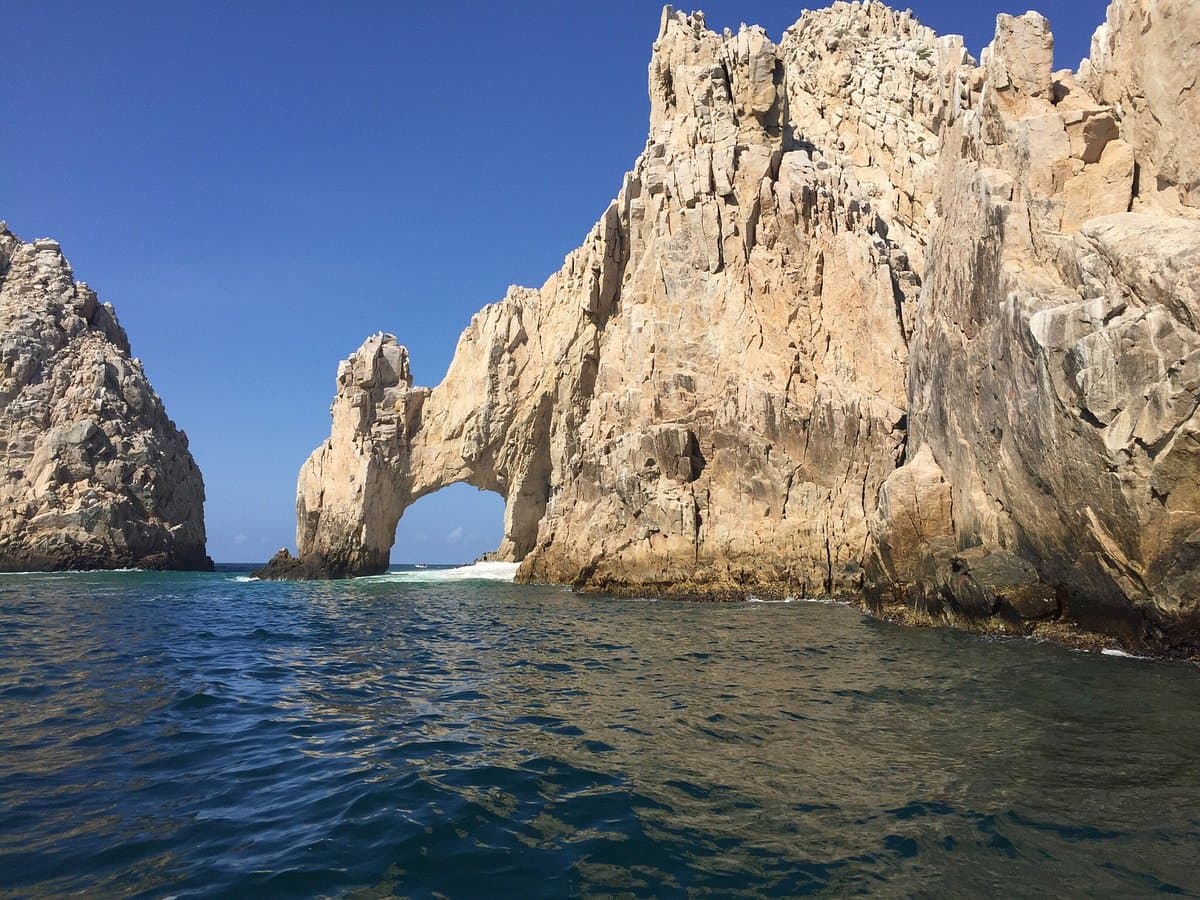
The 2025 to 2026 notice also set restricted zones where whale watching is not allowed because of heavy boat traffic, including the port area and a 2 km zone around the Arch of Cabo San Lucas, and a 3.5 km coastal strip at Cabo Pulmo. That is why tours head out beyond the arch rather than lingering at it.
- Minimum distance: 60 meters for boats under 10 meters long, 80 meters for larger boats.
- No more than four boats around the same whale or group; others wait about 240 meters away.
- Boats approach from the side and slightly behind, never head-on or encircling the animals.
- Slow speeds near whales and no sudden changes of speed or direction.
- Swimming, diving, kayaking and jet skiing with whales are prohibited.
Tips for a good trip
Go in the morning if you can, when the sea is usually calmer. Take a seasickness remedy an hour before if you need one, bring a layer for the wind, and use a phone or camera with a fast shutter rather than trying to film everything. Minimum ages vary by operator; one large operator sets 5 years for its whale-watching tours, so check before booking with children.
Choose a tour that runs close to your arrival rather than the last day of the trip, so there is room to rebook if wind or swell keeps boats in port. If your children are small, a sunset sail or a larger catamaran with a bathroom is kinder than two hours in an open panga, and many families find that one good boat trip plus mornings watching from the beach is enough.
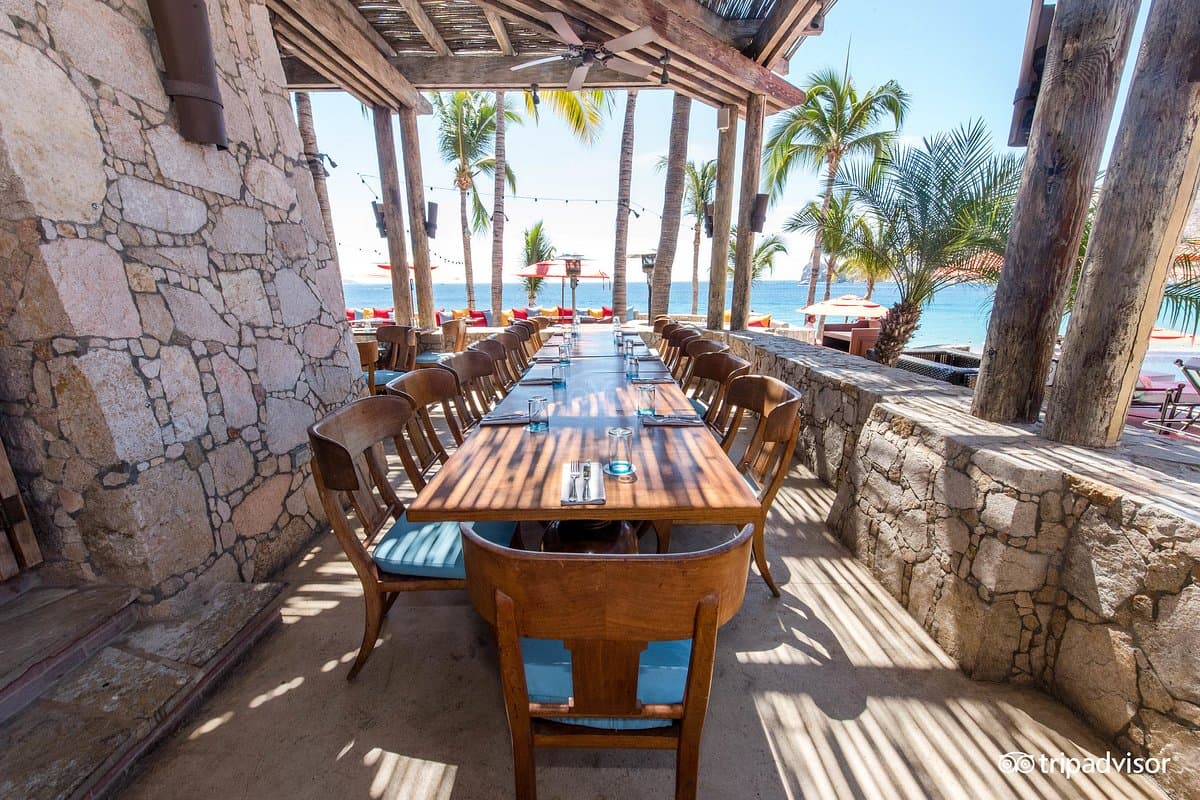
Staying on Médano puts both the beach viewpoints and the marina docks within walking distance. From Villa 1's terrace you look across the bay toward Land's End, so keep an eye on the water with your morning coffee. For winter dates, check Villa 1 availability; our whale watching page has more on booking a tour.